
7 Warning Signs That Scream to Buyers: “Don’t Buy From Me!”
Most B2B sellers don’t lose deals because of price or product. They lose deals because buyers don’t trust them.
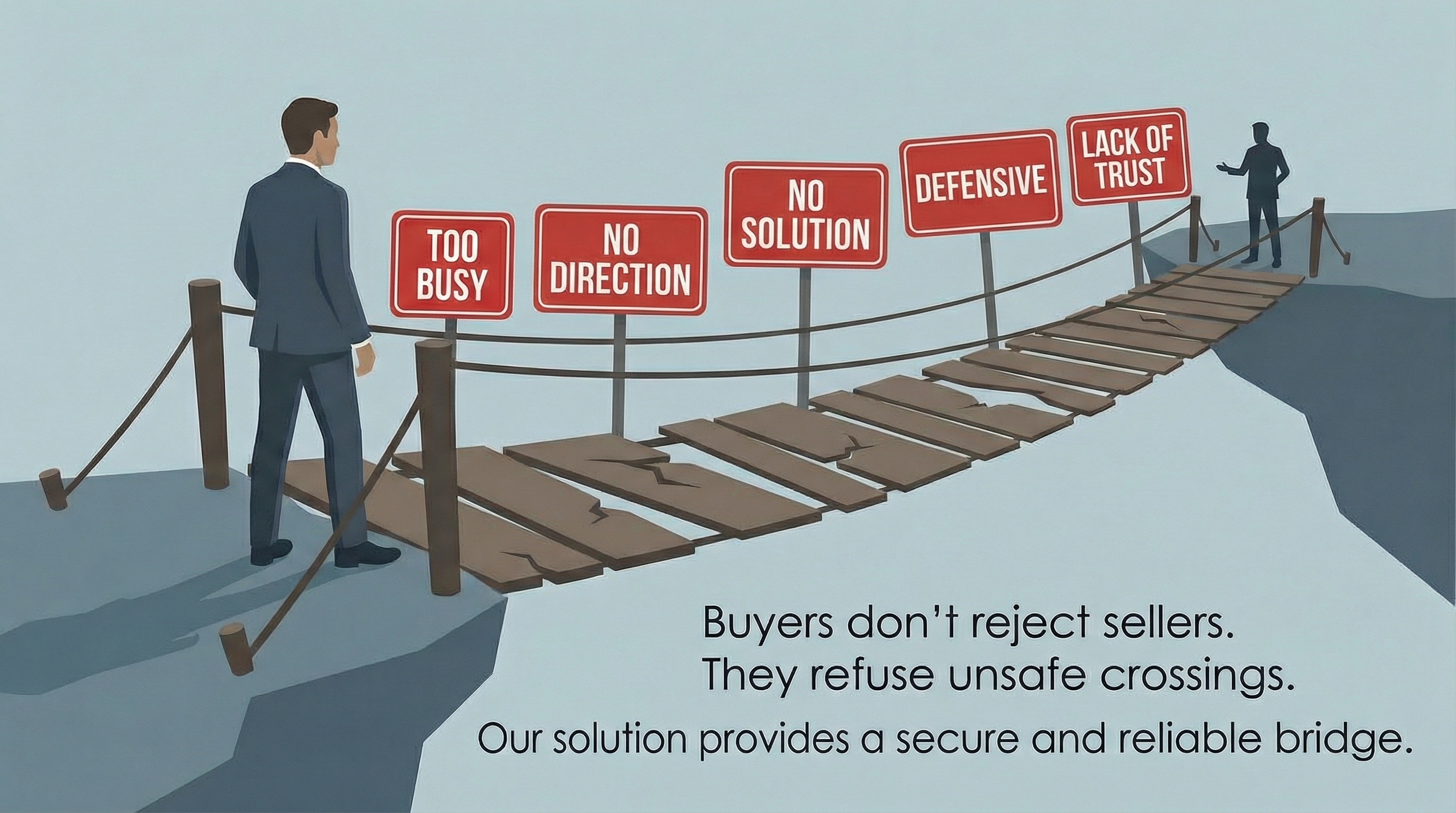
Buyers don’t judge sellers by how busy/excited they look.
They judge sellers by one thing:
“Will this person make my job easier or harder?”
Here are 7 things sellers do that quietly tell buyers:
“Buying from this person feels risky.”
1. Acting Busy Instead of Being Clear
What sellers do
- Send lots of emails
- Share long updates
- Book meetings just to “check in”
- Send too much content
Buyers think: “This seller is busy, but not helpful.”
- Being busy doesn’t mean being important.
- Buyers don’t need effort.
- They need clear thinking.
Cue: If your activity doesn’t reduce confusion, it’s noise.
2. Sharing Information Instead of Guiding Decisions
What sellers do
- Repeat everything from the last meeting
- Share slides and data
- Talk about progress, not next steps
Buyers think: “I still don’t know what I’m supposed to decide.”
Buyers don’t buy information.
They buy good judgment.
Cue: Every conversation should answer:
“What decision does this help me make?”
3. Asking for Permission Instead of Giving Direction
What sellers do
- “Would it be okay if…”
- “Should we maybe…”
- “What do you think we should do next?”
Buyers think: “This seller can’t handle responsibility.”
Buyers already carry risk.
They don’t want to think for you.
Cue: Strong sellers don’t ask for permission.
They explain choices and recommend a path.
4. Pointing Out Problems Without a Solution
What sellers do
- Talk about blockers
- Explain why things are hard
- Escalate issues
Buyers think
“Now I have more problems to solve.”
When you bring a problem without a solution,
you pass the thinking work to the buyer.
Cue: Never bring a risk without a fix.
5. Staying in Your Lane Too Much
What sellers do
- Say “that’s not in scope”
- Focus only on their product
- Ignore related issues
Buyers think: “This seller cares about their job, not my result.”
Buyers don’t buy products.
They buy outcomes.
Cue: Great sellers think beyond their product
while still respecting boundaries.
6. Trying to Be Perfect All the Time
What sellers do
- Over-polish decks
- Delay giving an opinion
- Avoid speaking up early
Buyers think
“This seller freezes under pressure.”
Perfection often means fear.
Buyers want progress, not perfection.
Cue: Give clear answers at the right time—even if they’re not perfect.
7. Defending Yourself Instead of Improving
What sellers do
- Explain why they were right
- Defend past decisions
- Argue with feedback
Buyers think
“This seller cares more about being right than getting results.”
Defensiveness kills trust.
Cue: When feedback comes, don’t defend.
Adapt.
The Big Deal:
Average sellers do what they’re told
Explain their work
Try to look busy
Trusted sellers reduce confusion, guide decisions, lower risk
Average sellers complete tasks.
Winning sellers reduce uncertainty.
Buyers always choose the second